Tuesday, 19 February 2013

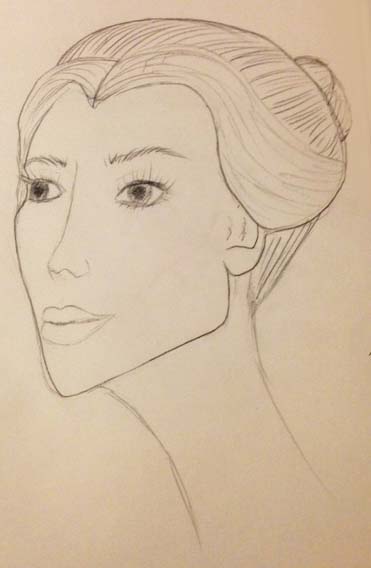
Miss Havisham

Above is my initial reaction to Miss Havisham's character, including some key descriptive words and how I would like to portray her.


I think that Havisham's character is very unusual considering the era in which the novel is set; an older, unmarried woman in charge of her own finance would have been incredibly rare - a polar opposite to the ideals of women at the time, whose roles would be centred on the family, motherhood and respectability, with Queen Victoria as the 'role model'.


I have got a lot of my inspiration from the BBC production of Great Expectations, as I love the way Havisham is frail and barely moves even when speaking. It gives the house a very haunted feel, especially when a young Pip discovers the wedding reception room.


I think this video I found on YouTube really captures the relationship between Miss Havisham, Estella and Pip.


The Estella Shoot


This is the final outcome of my Estella shoot, and after post-production, I am fairly pleased with the image. I wanted to portray Estella during her late teens before she leaves for Paris, however I think that the look I have produced is a lot younger, perhaps looking at a mid-teenage Estella. I have made the skin very pale, but added a slight dusting of colour in the cheeks and lips to give a youthful glow, and suggests an element of play and movement (contrasting to Miss Havisham, who I would think would have very little colour to her skin). I also darkened the under eye area with a mixture of colours from my Supra palette, as I wanted to portray the conflict within Estella, as I imagine she finds it frustrating to be trained and mentored to be cold, heartless and mature from an early age. The dark circles could suggest a lack of sleep and tiredness due to the constant effort she makes to uphold her mask.


The age I had wanted to portray Estella
A closer age to which I feel my image represents


I think I could definitely improve on my styling, as it is very simple and, although incorporates trends in terms of material from the era, I am not sure that the cut of the neckline is as accurate. Perhaps looking in Victorian costume shops would have helped with research and styling. I am disappointed that the hair is not on show, however I feel that the pose of the model demonstrates Estella's false front; the half smile demonstrating her cunning and manipulative learned behaviour.

I purposely pulled hairs out of the plaits from the side of Estella's face to give the impression that the front is not her true identity or feelings, and that she has been pulled apart by Miss Havisham and rearranged into the heartbreaker she wishes she could have been.

Tuesday, 12 February 2013

My Estella


 Here is the make-up and hair template that I have created for my Estella. For the hair, I have kept it fairly simple, but decorated with delicate flowers. The make-up plays up her fair complexion, however the flush in the cheeks and dark circles show how it takes effort to keep up this appearance as an unattainable beauty that doesn't fall in love. The freckles also add an air of innocence and youth to Estella, with the small tresses of hair that fall at her neck and front of the up-do show her human side.

I have prepared the outfit for Estella myself, rather than sourcing a ready made outfit at a costume shop. I have a ruffled vest from Primark which is complemented by the colours in the Victorian style portrait necklace. The blue lace fabric I will pin to the vest to create a lace neck and sleeve detail, attached to a white ruffled elastic to keep the silhouette tight. The blue flowers I will separate and pin into the hair; hopefully the colours will all work well together and give the impression that Estella takes pride and time in her appearance. The colours are fairly pastel, which I chose on purpose as the point in the story I want to depict is just before Estella leaves for Paris for her "finishing touches"; she is not yet completely trained to be cold.


WISH ME LUCK FOR MY SHOOT ON WEDNESDAY!

Estella's Make-Up


Here I was experimenting with bruising and scratches for Estella's character when she is with her abusive hudband. I used a Ben Nye wheel with my fingers for the black eye, and the red colour from my Supracolour pallet and a stipple sponge.

This is my first make-up look that I designed for Estella, during this part of her timeline.

Here she is very bruised, around her eye and slightly on her neck (this will peep through the neckline of the outfit I choose). Her lips is slightly plump and red from where she bites it (due to nerves and fear of her husband), and there are dark circles under her eyes from not sleeping properly (again perhaps through fear). I have given her rosey cheeks, which Estella may have pinched herself for going out in public.

I decided against this make-up look, as I felt is was very drastic and kept Estella to one very exact point in the story, whereas I think I would rather shoot a portrait of Estella's character overall - trained to hide her feelings behind a hard exterior.


This is my second make-up design for Estella, which shows her at a younger age, when she and Pip first meet. I have kept the makeup very youthful, with a fair complexion and very minimal colour in her face (as she grows up with Havisham who is very still and ghost like). I have sharpened the cheekbones with a contour colour, to mimic the cold front she is taught to portray. The brows are fairly full and well groomed, but not filled in, and freckles lightly dot across the nose as a sign of youth and innocence.

The model really effects this make-up and so I decided that this is not the right time in the story for me to depict Estella.

Victorian Hair

In our practical class we learnt how to create a typical Victorian up-do, incorporating curls and plaits.


 The main idea is a bun at the back of the head, with tresses of hair curled and pinned up around the bun, with a few pieces around the side of the face. Normally, Victorian women would prepare their hair the night before an event and curl their hair by tying it in ribbons and leaving overnight. Since we are in the 21st century, I used curling tongs and bobby pins to create the curls on my model, trying also to disguise the edge of the bun. Since seeing the results, I have decided to choose a model with naturally darker hair, as I feel the style would look better with a darker hair colour, with less variance in tones.


A great product that I discovered when working on models with frizzy hair or a lot of fly-aways (especially for creating the bun!) is Genuine Pluko. I had used this product after the above image was taken on a different model, and it really smooths the bun without a greasy or gelled appearance (use it sparingly!). I found it is also a good idea to backcomb the roots of the hair when creating the bun on any hair-type, as it gives a more stable structure when trying to maneuver the hair to remove any holes.


MY HAIR IDEAS


The first idea I designed was very similar to the basic style I was taught in class. A centre part, with a few strands curled around the base of the bun and then flowers pinned in to disguise any hair grips.


 The second idea was a lot more floral and heavily decorated, which in retrospect may be more appropriate for Miss Havisham than Estella. This again has a simple centre parting, however is a lot more elaboate, with two thick ringlets at the front of the face, and curls distributed all over the hair up to the bun.


This is my third idea of a hair style for Estella, which I feel is the most simple, yet youthful. After I had drawn this design, I thought more about details, including a few strands of hair falling down her neck, and at the front of her face. The centre part will drape back past the ears into a plait to join the bun. Instead of curls, I will then pin flowers into the hair to decorate. I think this suits the character better as she is youthful and naturally beautiful, rather than a 'try-hard'.


Victorian Accessories

I next thought to research other areas of fashion in the period, and so turned to accessories and jewellery. The two that I have drawn are a victorian style buckle ring, and one earring of a set. Each have diamonds (or clear stones such as cubic zirconia) however it is obvious that they are very different in style. This may be reflcetive of the fact that Victorian jewellery designers looked to the past for inspiration, starting with Grecian designs during the first few decades of the 1800s, then moving on to more renaissance period pieces,


"
There was also an interest in jewels inspired by the Medieval and Renaissance periods. It is a testament to the period's eclectic nature that jewellers such as the Castellani and Giuliano worked in archaeological and historical styles at the same time."


. Nature is a very obvious theme to the majority of the jewellery, including reference to flowers and fruits, which were fairly extravagant rather than delicate during the 1850s onwards. The colours of gemstones were also used to symbolise different emotions and messages within the flowers or fruit.

Necklace as part of a set, 1806


Spray ornament, maker unknown, about 1850. Museum no. M.115-1951
an example of naturalistic jewellery


This theme is also carried on into the hair accessories of the time, where women would decorate their hair with flowers or pieces of hair jewelery, such as brooches. When designing my Estella, I will take into consideration the natural element of jewellery and accessories when thinking both of styling and of hair, playing off the innocence and fragility of flowers against Estella's cold exterior.


a simple example of hair decoration
victorian 'mourning flowers'


Wednesday, 6 February 2013

Victorian Food

WORKING CLASS:

lived off of mainly potatoes, porridge and bread, however the more fortunate would also be able to afford bacon and other similar meats ('Working Class in England in 1844' F. Engles)

An extract from the book 'From Crow Scaring to Westminster' by George Edwards, tells that breakfast would be made up of bread soaked in water and a piece of butter for the extremely poor, with 2 slices of bread, a small piece of cheese and an apple or onion for dinner.


MIDDLE CLASS:

the middle class would typically have breakfast at 9am, then lunch at 12 with a pudding and then dinner at 6, lasting for up to 3 hours due to having on average 20-40 dishes!


UPPER CLASS:

breakfast- bacon, eggs, kedgeree, grilled sheep's kidneys, toast, marmalade, tea, coffee, cocoa

luncheon- soup, hot and cold meats, cheese, fruit tarts and blancmarge

dinner- soup, fish, roast beef, stewed apples, jelly and fruit